Main Memory Case Study: Cloud and managed services for mainframe environments
Powering a cloud platform on Adam’s infrastructure
The Challenge
Main Memory needed to evolve its infrastructure model towards a cloud and managed services platform capable of supporting both its internal IT and the critical services it delivers to its clients. This required a resilient architecture based on geographically redundant data centers, high-availability connectivity, and a more agile and customer-centric operational model than the one provided by its previous vendor.
The Solution
Adam provided a data center and connectivity infrastructure that enables the integration of both internal IT and customer-facing services within a single environment, consolidating rack space, communications, and connectivity under a single provider. Thanks to this infrastructure, Main Memory has been able to consolidate its data centers between Barcelona and Madrid, streamline vendor management, ensure power and connectivity SLAs aligned with its service KPIs, and operate on a more resilient, scalable, and easy-to-manage platform.

Main Memory is a technology company founded in 1987 by Rubén García and David García, specializing in IBM mainframe environments, critical infrastructure, and advanced services for systems that remain the operational core of many large organizations. Over nearly four decades, the company has built a strong reputation in the industry thanks to its deep technical expertise and a clear vision: to act as a strategic technology partner, supporting clients in the evolution of their IT infrastructures.
Today, Main Memory has a team of around 90 professionals and offices in Barcelona, Madrid, and Valencia, with annual revenues of €17 million. Its activity combines legacy infrastructure expertise with capabilities in cloud computing, preventive cybersecurity, traceability solutions for industrial and logistics environments, and managed services, enabling it to handle approximately 10,000 incidents per year.
Its clients are primarily large enterprises—especially in sectors such as banking, industry, and organizations with critical infrastructure—that require high levels of availability, resilience, and technical specialization to operate securely in mainframe environments and complex IT architectures.
From IBM specialist to strategic technology partner
In the late 1980s, Rubén García and his partner, David García, decided to steer their careers toward a more advanced technological environment. Their first steps were within the IBM mainframe ecosystem, addressing needs that many clients were unable to cover through traditional channels.
“We started in the IBM mainframe world from the perspective of a broker of second-hand machines, because we didn’t yet have partner agreements with IBM,” explains Rubén García.
From that point on, the company began working with large organizations that required more agile and competitive solutions for their infrastructure. Over time, this specialization in critical environments, combined with their ability to adapt to client needs, allowed them to establish themselves as a reference provider in a highly specific market, where stability, trust, and deep technical expertise are essential.
As the years went by, this initial relationship with the market evolved into a formal partnership with IBM. However, beyond this commercial milestone, what truly defines their trajectory is something else: the company developed a deep understanding of a critical, closed, and highly demanding environment, where there is no room for improvisation and where client trust is built over the long term.This combination of technical expertise and long-standing client relationships explains why the company continues to be a trusted provider for large, complex organizations that heavily depend on the stability of their systems—particularly in sectors such as banking, industry, and large corporations where the mainframe remains a key component.
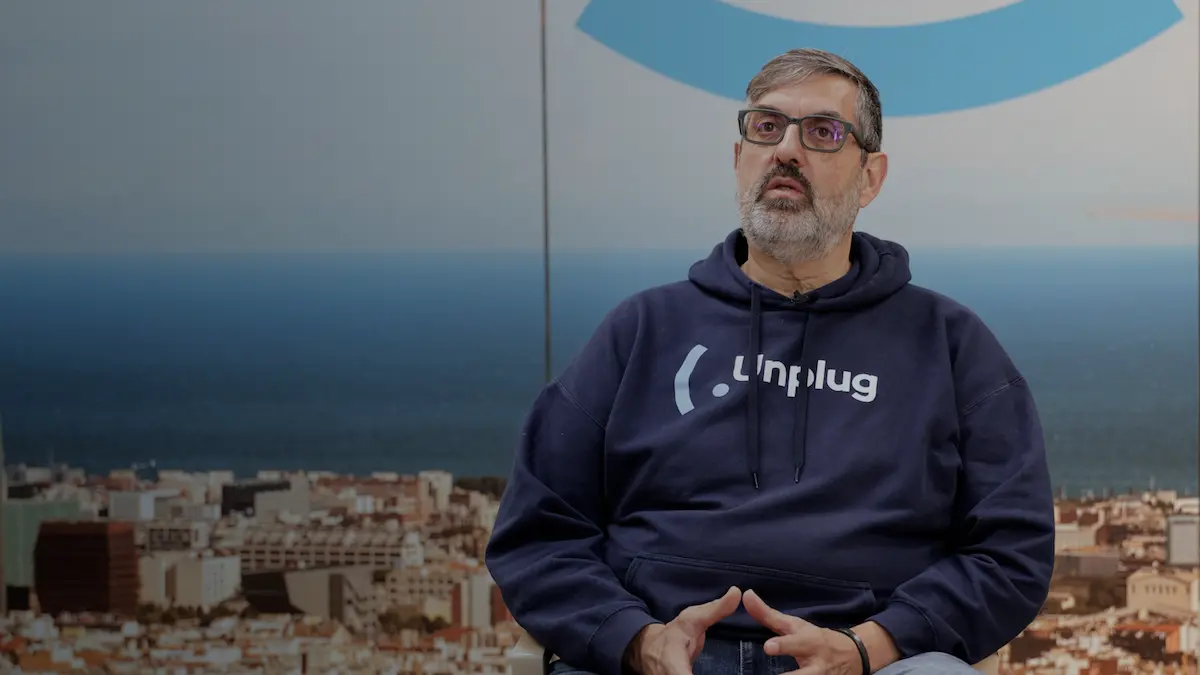
“We started in the IBM mainframe environment, but from the perspective of a broker of refurbished hardware, as we did not yet have agreements in place with IBM“
Rubén García, CEO
Service philosophy and specialization: staying close to the customer in the “last mile”
Over the years, Main Memory’s mission has evolved in parallel with the broader technology landscape. While its early activity was more focused on infrastructure, in recent years the company has shifted its value proposition toward managed services and cloud-based models.
The idea that best summarizes this evolution is how the company defines itself: as a Technology Partner to its clients. Rather than simply supplying technology, its goal is to support organizations in the operation and evolution of their IT environments—staying close to the customer and assisting them in what they refer to as the “last mile.”
As Rubén explains, “about five years ago, we decided to move towards managed services, as we could already see that the infrastructure model was changing.”
This approach translates into a service model built on specialization and close client engagement. Today, Main Memory’s activity is structured around four core areas: cloud, cybersecurity, traceability, and infrastructure. In the cloud domain, for example, the company has developed solutions specifically tailored to mainframe environments, where historically there have been limited outsourcing options for organizations seeking to modernize their infrastructure without abandoning their core technology.
Based on the specific needs of its clients, Main Memory has designed a model in which systems can be hosted in its data centers, operated on a pay-per-use basis, replicated externally, or supported by offsite backup solutions. This approach enables organizations to adopt Infrastructure-as-a-Service (IaaS) models while maintaining the levels of stability and security required by mission-critical systems.In parallel, the company has developed a cybersecurity offering with a clearly preventive approach through its 24×7 Security Operations Center (SOC), as well as traceability solutions aimed at logistics and manufacturing environments. Overall, the objective is not to diversify without focus, but to consolidate a highly specialized service portfolio capable of supporting each client over the long term.
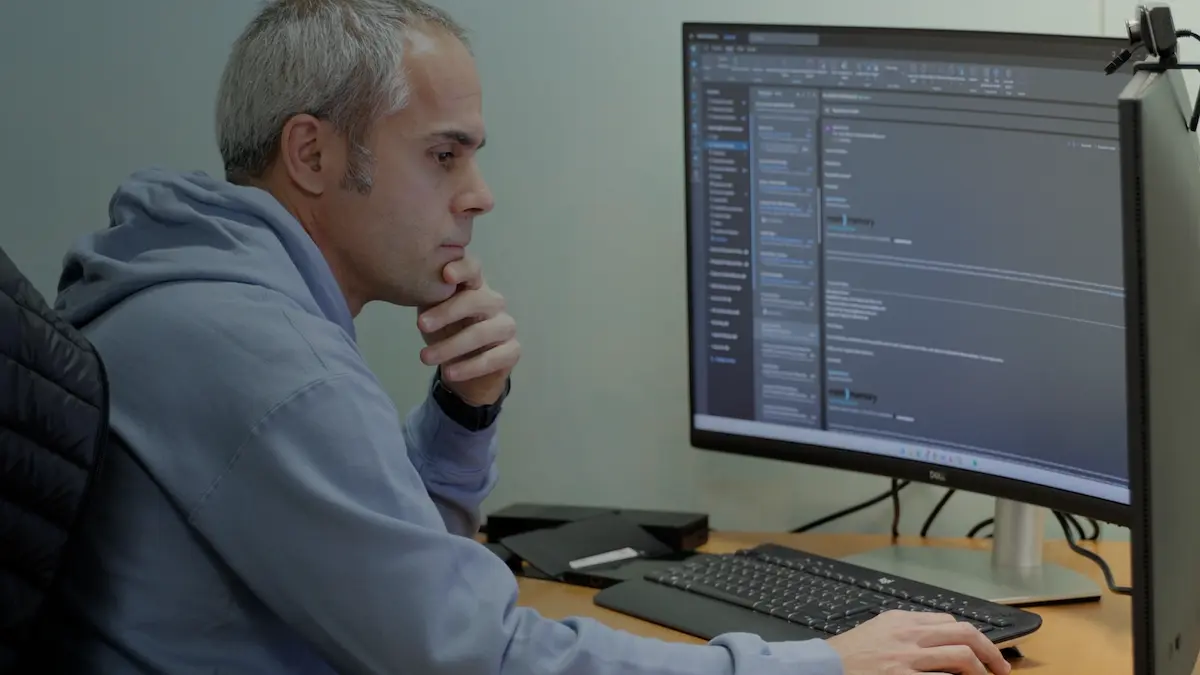
“About five years ago, we decided to move towards managed services, as we could already see that the infrastructure model was evolving […]. Our goal is to become a technology partner to our clients”
Rubén García, CEO
Specialization, reputation, and competing against much larger players
Main Memory operates in a segment where its clients are large-scale organizations: banking, heavy industry, IBEX 35 companies, and major corporate environments whose core business still relies on mainframe platforms. For a company of its size, competing in this space requires a very specific combination of capabilities.
Rubén García highlights two key factors: specialization and reputation. The former translates into continuous training, certifications, close relationships with technology vendors, and constant technical upskilling. The latter relates to something far more difficult to build and maintain: trust and market credibility. After 38 years in the industry, the company has earned a position that is not defined by its size, but by the quality of its services and the trust it generates:
“In the end, when you’ve been in the market this long, you build a reputation. And reputation is something you either earn—or lose—on your own,” says Rubén.This reputation is further reinforced by a deliberate approach to engaging with large clients. Main Memory often participates in meetings where they represent a small team facing large client-side groups. As a result, clarity, transparency, and the ability to clearly articulate their services are key components of their value proposition. They do not simply deploy technology; they help clients understand it, contextualize it, and translate it into viable operational decisions.
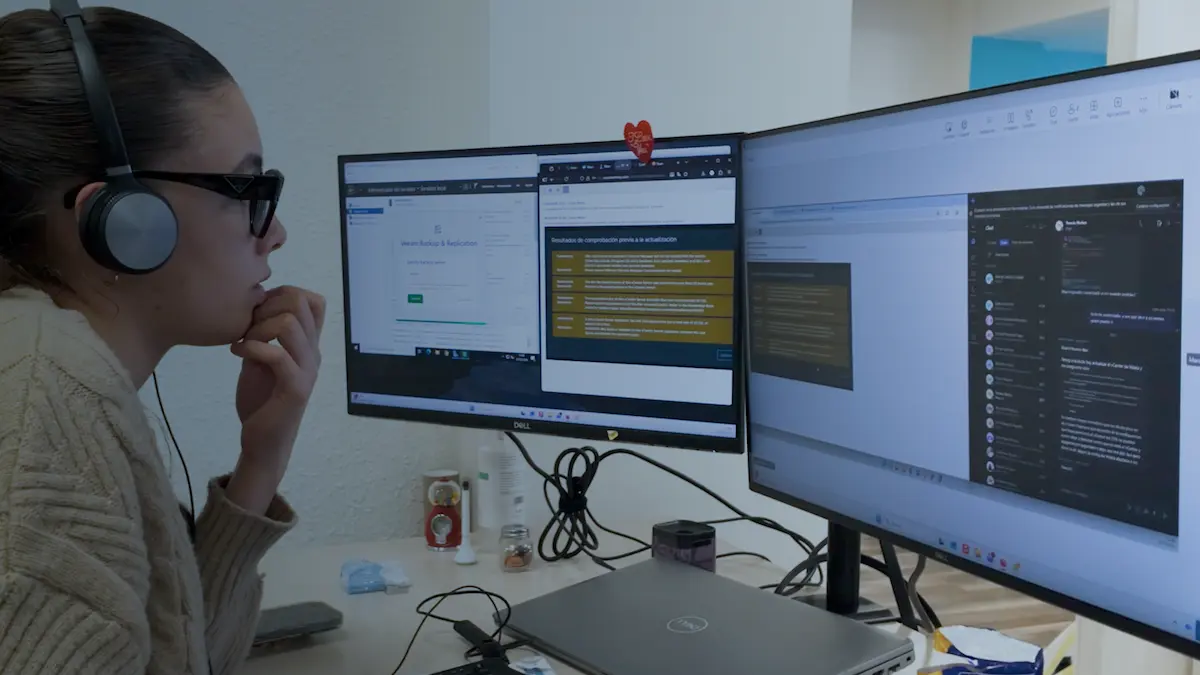
“When a client reaches out, the moment we receive the incident, we work side by side with them until the issue is fully resolved”
Daniel Puig, COO
Client relationships: technology, always with a human approach
One of Main Memory’s most distinctive traits is the importance it places on the human element in its client relationships. The company has even developed two brand concepts to reflect this philosophy:
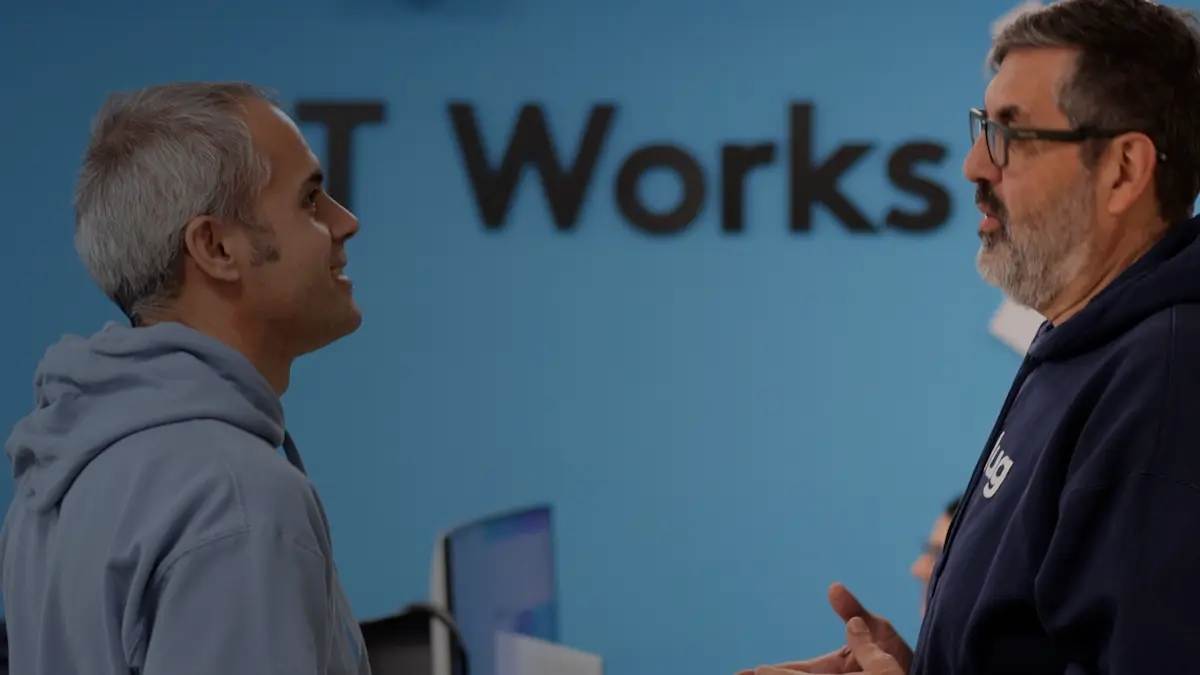
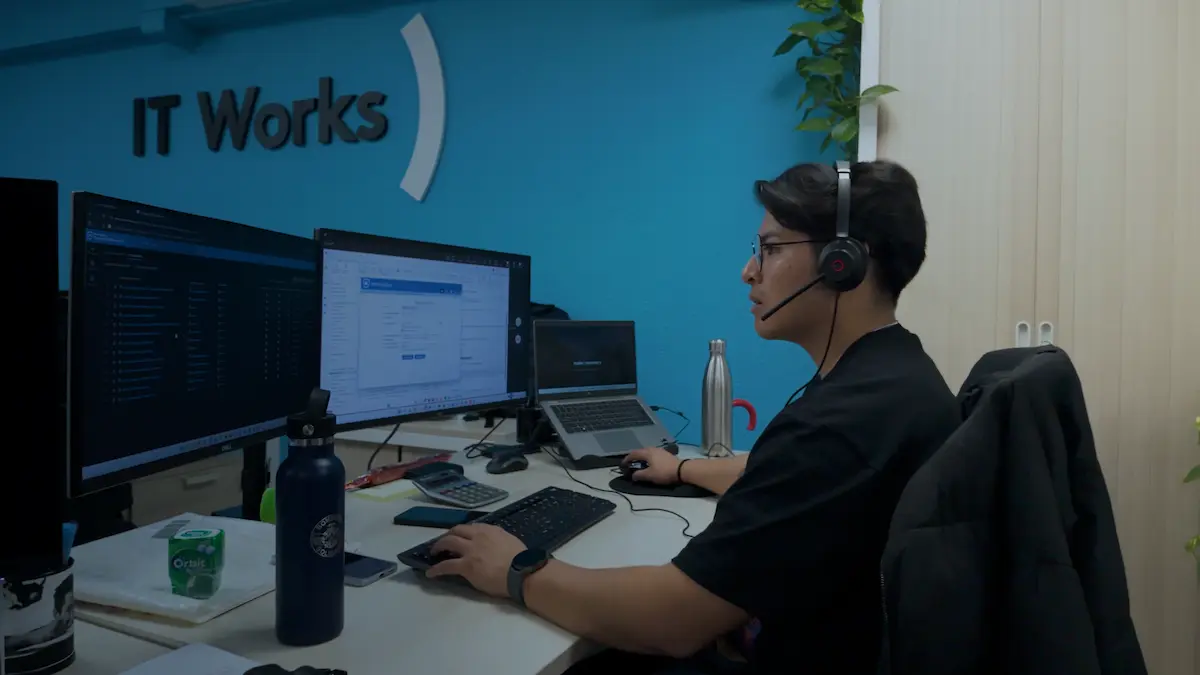
- IT Works, for strictly professional activities
- Unplug, for initiatives designed to strengthen personal relationships with clients and partners
Under this concept, they organize informal gatherings such as barbecues, Family Days, or movie sessions with clients and their families, with the goal of building closer, long-lasting relationships.
“We strongly believe that in the technology world, people are what matter most.”
This approach is particularly relevant in environments with mission-critical infrastructures, where trust and long-term relationships are just as important as technical expertise.
How they discovered and selected Adam
When Main Memory began developing its own cloud model to support the services it delivered to clients, it initially worked with another infrastructure provider due to shared customers. Over time, however, they realized that this environment was too complex and lacked the flexibility required for their operating model.
“It was a provider that was too large and too rigid in the way they operated. We needed someone more flexible and closer to us,” says Rubén.
As a result, the company decided to assess the market to find a provider better aligned with its service philosophy. The process involved evaluating both technical capabilities and ease of collaboration, based on a deeper criterion: how the provider supports and engages with its clients. Adam quickly stood out in this analysis:
“We felt that Adam was the most friendly and the easiest to work with. Everything was simple and straightforward,” Rubén adds.
“With Adam, we found exactly what we were looking for: a close, accessible provider that is easy to work with on a day-to-day basis”
Daniel Puig, COO
Working with Adam: agility, simplicity, and a single point of contact
One of the aspects most valued by Main Memory when working with Adam is the simplicity of day-to-day operations. The company was looking for an agile provider, with direct communication channels and the ability to respond quickly to its needs.
“Being able to call someone who answers immediately and helps you resolve what you need may sound trivial, but in many cases it isn’t,” explains Daniel Puig, Main Memory’s COO.
Additionally, service consolidation has enabled more efficient vendor management. Previously, Main Memory had to coordinate multiple providers for data center and connectivity services. With Adam, they have been able to centralize everything:
“We now have a single point of contact for everything related to public IP, connectivity, and rack space.”
This model allows Main Memory to operate more efficiently and allocate more resources to developing the services it delivers to its clients.
“Being able to call someone who picks up immediately and resolves your needs quickly may seem basic, but in our sector that’s not always the case—and with Adam, it is”
Daniel Puig, COO
Growth in cloud and managed services
The partnership with Adam has been particularly significant during a key phase of strategic consolidation for Main Memory. The company had started building its own data center and cloud model to support infrastructure sales to its clients. Over time, this support model has evolved into a fully independent business line and, according to Puig, has become the company’s main revenue stream: “Right now, Main Memory’s number one revenue stream is this Infrastructure-as-a-Service business.”
Adam’s infrastructure has enabled Main Memory to support this evolution on a solid and scalable foundation. On one hand, it allows them to host services with the level of resilience required by the market; on the other, it facilitates inter-data center replication, redundant connectivity, and business continuity in scenarios where there is no room for failure.
In addition, the company is currently undergoing a significant transformation phase: migrating its current disaster recovery environment at Adam to become the primary site, while simultaneously deploying a new DR environment at Adam Madrid. The goal is to decommission its initial data center with another provider and fully consolidate this new architecture.
Investing in young talent and vocational profiles
Another defining characteristic of Main Memory is its strong commitment to young talent. In a sector where much of the legacy knowledge is tied to highly experienced professionals, the company has actively worked to bring in younger profiles to ensure knowledge continuity.
To achieve this, Main Memory primarily hires candidates from vocational training programs, whom they consider particularly well-prepared for technical roles from a practical standpoint: “We’ve chosen not to work with university graduates, but rather with vocational training profiles,” they explain.
The company supports their professional development through continuous training and internal growth opportunities, helping to create a stable working environment with very low turnover and a strong commitment to the company’s long-term project.
The future: consolidation, improvement, and sustainable growth
When Rubén García speaks about Main Memory’s future, he highlights a key strategic decision: not to sell the company. In a market where many mid-sized firms have been absorbed by large corporations, Main Memory aims to preserve the value of being a specialized, flexible, and close-to-client organization.
From there, the roadmap is clear: avoid unfocused diversification. The goal is to strengthen its four core business lines and continuously improve them. Growth will come as a result of service quality and expanded geographic coverage—not from pursuing new areas without depth.
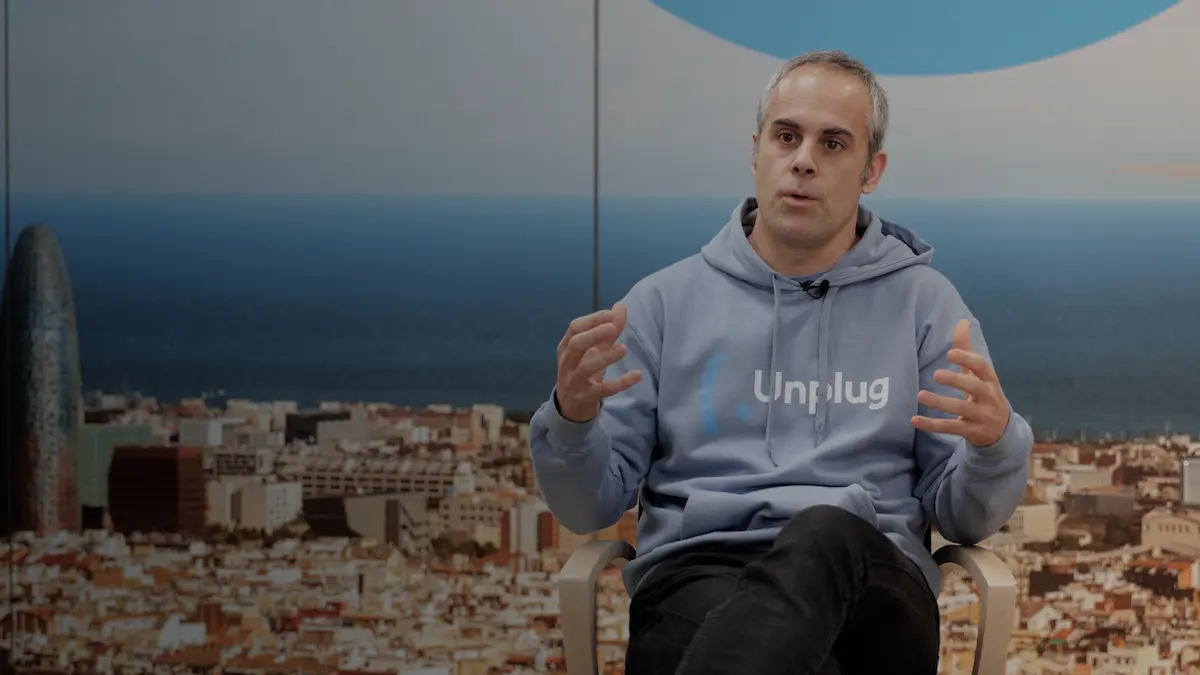
“The relationship with Adam works very well because we share a similar approach to service. We aim to stay close to our clients, and Adam does the same with us”
Daniel Puig, COO
A partnership supporting Main Memory’s evolution
The success case of Main Memory and Adam goes beyond a technical deployment or a one-time infrastructure improvement. It demonstrates how a highly specialized company with a strong service culture can find in its data center and infrastructure provider a partner capable of supporting a broader strategic transformation.
Main Memory needed a robust foundation to scale its cloud platform and managed services offering, but it also required something less tangible and harder to find: ease of collaboration, agility, responsiveness, and a partner with whom the relationship felt natural. Adam has met both needs, enabling the company to consolidate vendors, streamline operations, maintain demanding KPIs, and continue growing its Infrastructure-as-a-Service business on top of a reliable and scalable platform.
Ultimately, the relationship between the two companies works because they share a similar approach to service. Main Memory aims to stay close to its clients, genuinely support them, and guide them through complex environments without losing flexibility or a human touch. To achieve this, it needs partners who operate in the same way. That is precisely where Adam has positioned itself as a natural partner in this stage of Main
Need to discuss your housing or project?